
Evolution of a rite
In this article:
1. Ancestral purpose: Pain, courage, and identity
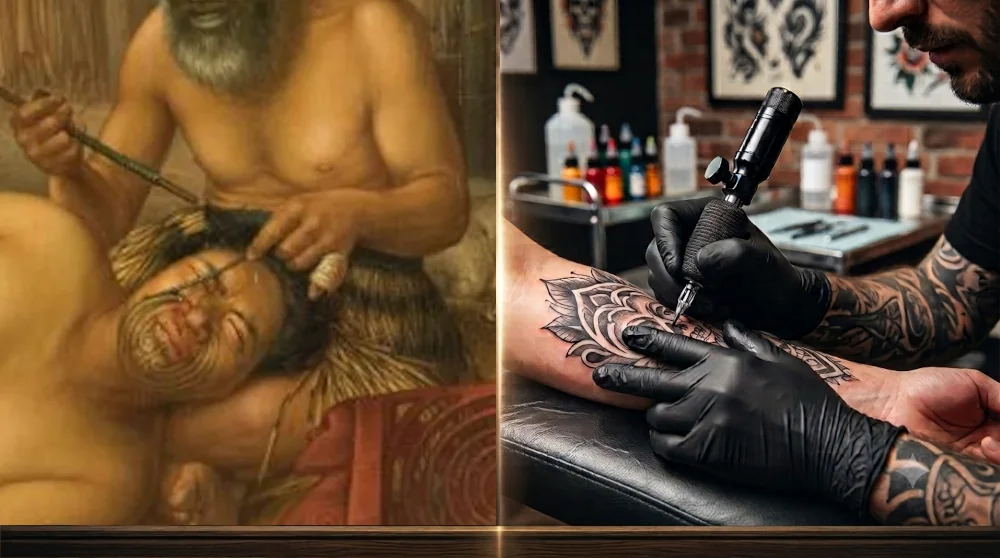
Tattooing techniques have undergone a long evolution over time. While this progression led away from the initial purpose of tattoos for ancient communities—which was to send their spirit toward the deities and challenge themselves through physical pain to show their courage—new technologies have allowed everyone to approach tattoo art openly.
Since people can now be tattooed safely and with minimal discomfort, they can treat tattoos as true embellishments of their own bodies. Did you ever have a favorite dress or a meaningful amulet you wished you would never have to take off? Tattoos have become exactly that: a permanent decoration of our body which we carry with us wherever we go, communicating our story to others and fading with us at the end of our earthly journey.
2. From scars to chisels: Ancient tattooing methods
 Initially, tattoos were just intentional scars, cuts, and deep carvings etched into the body to form geometric patterns and prove one's courage. Nowadays, similar practices, widely known as "body modifications," are experiencing a revival, but they remain entirely distinct from tattoos as we presently know them.
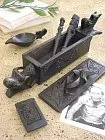 Early humans eventually discovered that by introducing dye into these cuts, an indelible track remained inside the skin. That discovery became the true precursor to modern body art. One very common method of tattooing among several historical cultures consists of hammering on the skin with a sharp chisel to drive the drawing below the dermis. This ancestral hand-tapping approach is traditionally called tattooing "by pricking".
Another less common ancient technique, known as tattooing "by sewing," consists of passing a dye-drenched thread sliding directly under the skin layers, meticulously tracking the lines of a previously drawn pattern.
3. Three modern technical traditions
Presently, three main regional methods are widely recognized across the global tattooing community:
- The Samoan Method: Liquid dye is inserted securely under the skin using a hollow small stick or bone comb. This traditional technique is heavily ritualistic and remains quite painful.
- The Japanese Method (Tebori): Specialized sets of long needles are obliquely inserted into the skin manually with swift, precise rhythm. While it requires endurance, it creates remarkably vibrant color packing.
- The American Method: This is the most widely accessible method across modern studios. It utilizes an electric machine to rapidly deposit the dye under the dermis, causing a warm, vibrant sensation rather than intense pain.
4. The electric machine: Art accessible to everyone
 The invention and widespread adoption of the electric tattooing machine marked the exact historical moment when tattoos became accessible to everyone. By removing the barrier of intense physical pain, it became almost impossible to resist the aesthetic call of an art form that makes each of us completely unique.
Many people can purchase and wear my exact same clothes, but my custom tattoo belongs to me alone. We invite you to explore our archive and download the specific layout that inspires you the most. Feel free to modify its lines to match your personal vision before taking it to your preferred tattooist, or share it with them directly to map out your perfect custom piece!
And once your brand new piece of custom body art is completely healed... make sure to show it off to everyone!
Article Discussion
No comments yet... be the first!