
Glowing tattoos
In this article:
1. Hidden body art: Breaking free from constraints
Did your job or other everyday constraints keep you from getting that permanent tattoo you love?
Until not so long ago, the only real alternatives were temporary henna tattoos, which don't leave any track after a few months but are perfectly visible before that, or solar tan tattoos, which require a massive dose of patience to get and, guess what? They are completely visible too until they naturally fade away.
You could object that you want your tattoo to be visible; why have a piece of body art that no one can see, not even you?
2. Fluorescent vs. phosphorescent: How blacklight ink works
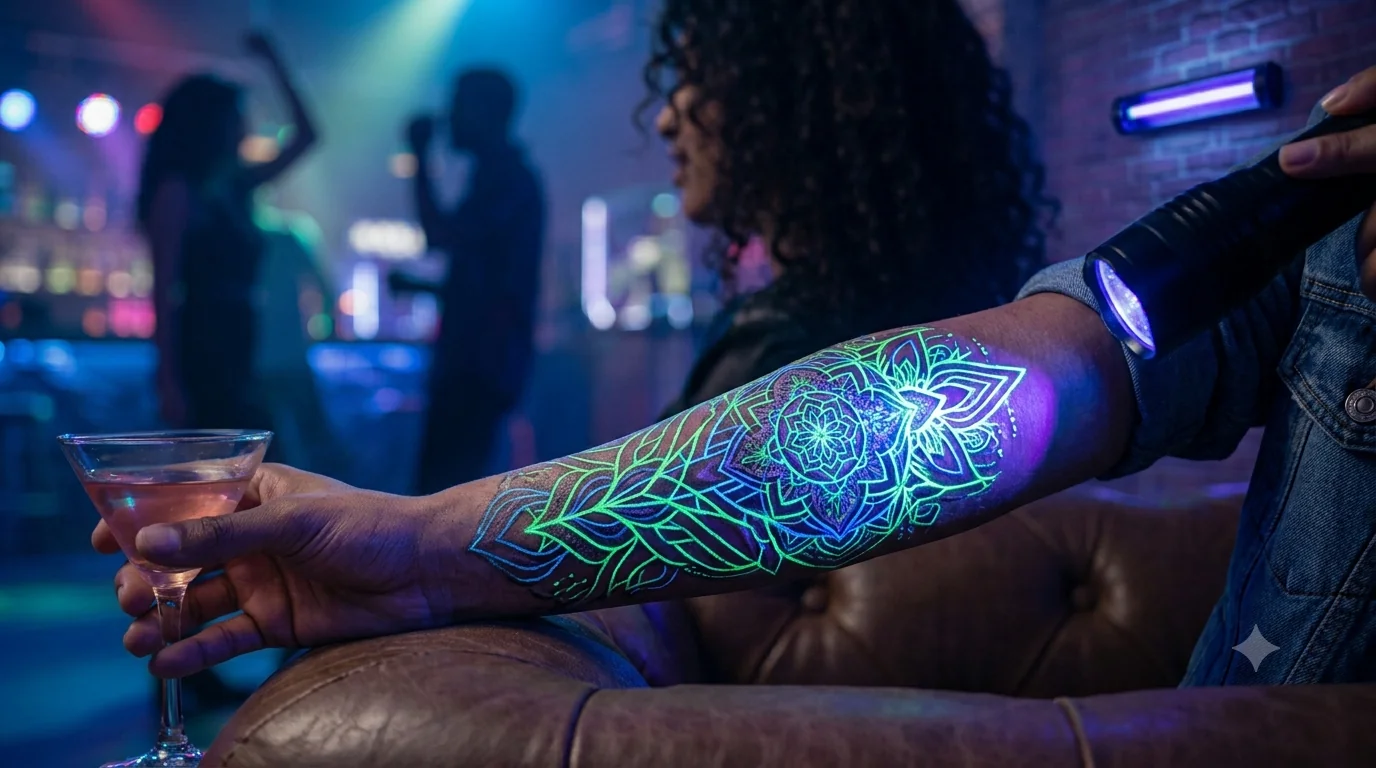
But what about a custom design that becomes visible in specific settings only, like in the darkness of a dance club? Today, it is entirely possible to create hidden designs using specialized UV-reactive tattoo inks. These fluorescent pigments stay nearly invisible or faintly translucent under normal daylight, but they violently glow in the dark when exposed directly to ultraviolet blacklights—the exact same lights used in entertainment venues to make white clothes glow.
3. The reality of safety: Ingredients and regulations
When diving into this trend, it is crucial to separate safe modern practices from dangerous chemical alternatives. High-quality blacklight tattoos rely strictly on fluorescent microspheres safely suspended in sterilized water solutions. This core tracking technology has actually been utilized securely by wildlife researchers on animals for decades to monitor natural migrations without triggering adverse biological reactions.
However, you must stay completely away from older or unregulated formulas that feature phosphorus—a toxic substance that absorbs ambient light to emit an independent glow-in-the-dark effect. True phosphorescent inks are highly carcinogenic, unregulated, and notorious for triggering severe skin irritation, blistering, and deep chemical rashes.
⚠️ Important Regulatory Fact:
Be cautious of ink brands claiming to be "FDA-approved" for human application. The FDA has never officially approved any internal tattoo pigments or ink ingredients for injection into human skin. Any existing clearances for luminescent or UV inks apply exclusively to tracking livestock, identifying fish, or branding commercial seafood products!
If you are planning on getting an invisible blacklight piece, your absolute priority should be to consult with a highly reputable, professional tattoo artist. Proactively ask to review the safety data sheets of their specific inks to verify their chemical contents. True knowledge is power, and keeping yourself informed on exact product ingredients guarantees you can shape your dream body art safely!
Article Discussion
No comments yet... be the first!