
Home made Henna ink
In this article:
1. Natural body art: The safe approach to DIY henna
Unlike permanent body modification options—which require sterile, industrial studio environments and specialized machinery—creating beautiful, temporary **henna tattoos** is an ancient art that can easily be practiced safely right at home.
⚠️ Crucial Health & Safety Note:
Always ensure you are using 100% natural, pure herbal henna powder. Beware of commercial products sold as "Black Henna." Natural henna yields exclusively red, orange, or rich brown stains. Products labeled black frequently contain toxic synthetic chemicals like para-phenylenediamine (PPD), which can cause severe chemical burns, permanent allergic reactions, and deep skin scarring!
Crafting your own fresh batch guarantees you know exactly what is going onto your skin. The secret to achieving an intensely dark, long-lasting stain relies entirely on how you balance your raw materials and guide the natural dye-release timeline.
2. Essential ingredients: Choosing your raw materials
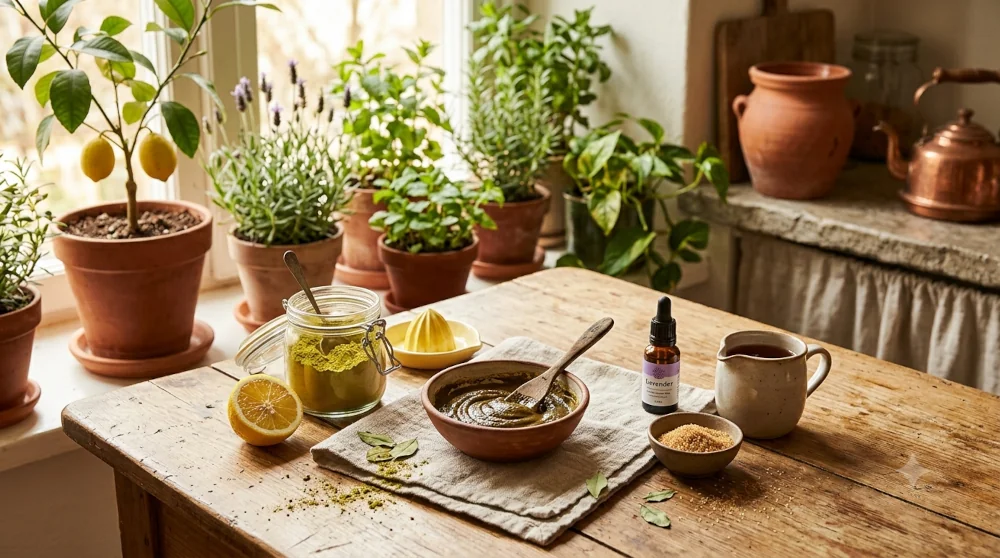
Preparing a highly pliable, smooth paste is the most important foundation of the craft. To mix a professional-grade batch, you will need to gather a few fundamental ingredients:
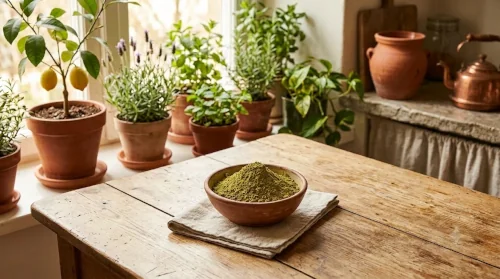
- Fresh, Finely Sifted Henna Powder: Use fresh powder that has been stored airtight, away from sunlight. Ensure it is thoroughly winnowed to eliminate any coarse leaf debris, which guarantees a smooth fluid mix. High-dye-content powders sourced from regions like Yemen, Morocco, Rajasthan, and Pakistan are ideal choice standards.
- Essential Oils with Terpenes: Mixing in a few drops of pure, skin-safe essential oils rich in monoterpene alcohols (such as high-quality lavender, tea tree, or cajeput oil) will interact with the plant matter to dramatically brighten and deepen the final stain color.
- Sugar: Adding roughly one teaspoon of standard sugar per 10 grams of powder changes the physics of the paste. It makes the fluid significantly smoother, more elastic, and helps it adhere flat to the skin surface without cracking off prematurely as it dries.
3. Step-by-step preparation: Mastering dye release
When ready to mix your ingredients, begin by bringing your water or preferred tea base up to a boiling point, then allow it to cool down to a warm, comfortable room temperature before adding it to your dry powder. The consistency of your mixture is incredibly vital: it needs to mimic a smooth, silky paste that flows effortlessly through a fine nozzle without being watery enough to drip across the skin.
For optimal chemical results, incorporate a splash of lemon juice into your liquid blend. The natural acidity helps speed up the oxidation process of the plant material, making the eventual stain significantly deeper and more vibrant. Once you have gently incorporated your liquids, sugar, and essential oils into a smooth paste, cover the container tightly with plastic wrap. Let the batch rest undisturbed overnight at room temperature to allow the natural dye molecules to fully release.
4. Application tips and stain optimization
You can tell your paste is ready for use when the surface layer shifts into a rich, slightly dark reddish-brown hue. To apply your custom designs, spoon the paste directly into an empty, soft plastic cone—modeled exactly like the fine parchment cones pastry chefs use to paint intricate decorations on cakes. This soft cone structure gives you extreme accuracy when tracing complex floral and geometric configurations. Alternatively, specialized soft applicator bottles can easily be sourced online for consistent fluid control.
Once you finish drawing your custom design, the henna paste must be left to sit completely undisturbed on the skin for a minimum of 4 hours, though letting it dry for 7 to 8 hours is highly recommended. Because pure henna oxidizes gradually upon contact with air, keeping the dried paste on the skin longer guarantees that the resulting art will cure into a stunning, dark mahogany tone that will last for weeks.
One final studio tip: Be incredibly careful not to mix your paste or apply your designs while wearing your favorite clothing. Natural henna acts as a highly potent permanent dye; if it accidentally comes into contact with fabric fibers, it becomes almost completely indelible!
Article Discussion
No comments yet... be the first!